
By Greg Smith, Head of Strategy, OLYX Oil
Australia’s fuel-security debate has moved beyond theory and into practical reality. For years, fuel supply was largely treated as a background function of the global economy. Businesses, governments and consumers assumed international markets would continue operating smoothly, shipping routes would remain open and long-standing trade relationships would guarantee access to fuel when needed.
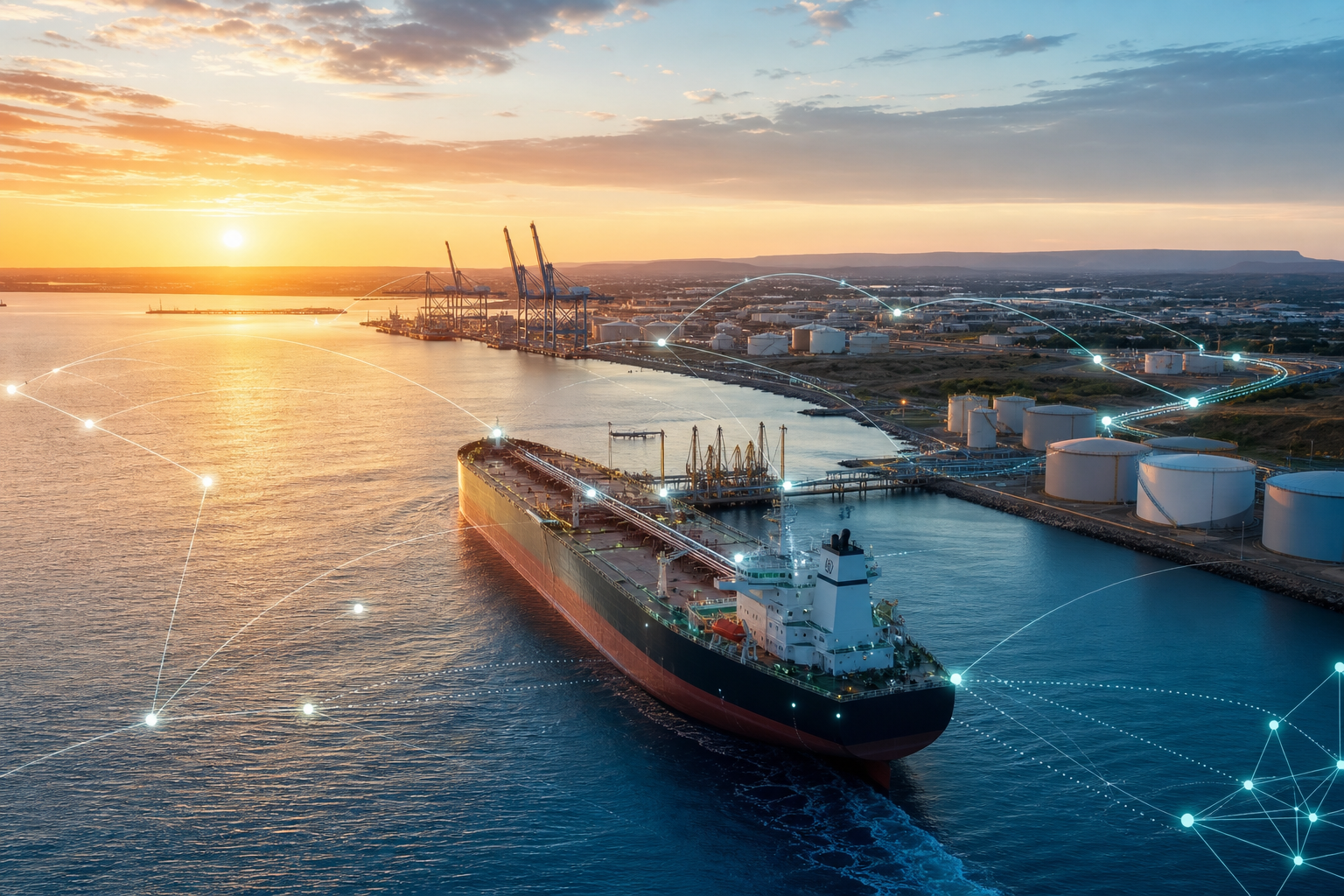
That assumption is now being challenged by geopolitical instability, shipping disruptions, supply-chain volatility and growing pressure on international energy markets.
The Australian Government’s National Fuel Security Plan acknowledges that disruptions to global oil and gas supplies can directly affect Australia and that maintaining reliable fuel access requires cooperation between government, industry, overseas suppliers and state authorities. At the same time, Export Finance Australia’s Strategic Reserve framework has highlighted the growing importance of additional supply pathways and strategic fuel capability in times of uncertainty.

For businesses operating in the sector, this signals a major shift in how fuel security is being understood.
According to Greg Smith, Head of Strategy at OLYX Oil, Australia’s challenge is no longer simply about fuel pricing or market availability.
“Australia’s fuel problem is not just about price,” Smith says. “It is about certainty. If fuel cannot be sourced, verified, shipped and delivered when supply chains are under pressure, then the price on paper becomes irrelevant.”
That distinction matters because fuel security is increasingly becoming a supply-chain and execution issue rather than just a commodity issue.
In practice, fuel must not only exist somewhere in the global market — it must also be verified, financed, transported, documented and delivered on time. Every stage of that process introduces risk. Delays in shipping, communication failures, route disruptions or documentation problems can quickly affect delivery schedules and commercial outcomes.
This changing environment is creating room for a new generation of agile fuel operators focused on flexibility, logistics intelligence and diversified international relationships.
OLYX Oil is positioning itself around that opportunity by building a broader international relationship network across Europe, the United States, India, Japan and Singapore. Each region contributes different strategic strengths to the company’s market perspective and supply understanding.
Europe offers commodities expertise, financial capability and compliance experience. The United States provides supply optionality and trading intelligence. India remains increasingly important for refining and shipping, while Japan continues to be a stable and strategically important regional energy partner. Singapore remains one of the world’s most significant fuel-trading and logistics hubs, although reliance on any single hub is increasingly viewed as a risk in itself.
“Our relationship network gives us more than one lens on the market,” Smith explains. “In today’s environment, relying on a single route, supplier or assumption is not a sustainable strategy.”
That broader approach reflects a larger transformation taking place across global energy markets.
Fuel security is no longer a straight-line supply-chain problem. It has become a network problem that depends on relationships, route flexibility, logistics coordination and communication across multiple jurisdictions.
The Australian Logistics Council has also argued that fuel resilience should be viewed as a whole-of-supply-chain challenge requiring coordination from production through to final distribution. That perspective reinforces the importance of logistics capability and operational visibility.
OLYX Oil is investing in systems and processes designed to improve communication with shipping agents, support route analysis and strengthen visibility across the transport chain. The company is also exploring AI-assisted route-planning systems intended to help operators assess shipping conditions, timing constraints and delivery risks more efficiently.
Importantly, the company does not present technology as a replacement for experienced operators.
“Technology should support better decision-making, not replace human judgement,” Smith says. “The goal is to reduce blind spots and improve visibility across the logistics process.”
That balanced message is increasingly important in a market where credibility and execution matter more than exaggerated promises.
OLYX Oil does not claim to replace Australia’s major fuel suppliers or guarantee supply outcomes during emergencies. Instead, the company’s position is that Australia benefits from having additional operators capable of contributing more optionality, diversified sourcing and flexible logistics capability to the market.
That distinction reflects the reality of Australia’s fuel-security challenge.
Government policy can identify vulnerabilities and support resilience initiatives, but private operators still need to source product, manage relationships, coordinate logistics and move fuel efficiently through increasingly complex global systems.
Recent activity under Export Finance Australia’s Strategic Reserve powers illustrates this shift. The organisation announced support for approximately 100 million litres of additional diesel sourced from Brunei and South Korea to help address supply vulnerabilities and regional shortages.
The significance of that move extends beyond the fuel volume itself. It demonstrates a growing policy emphasis on diversified sourcing, practical delivery capability and additional supply pathways into the Australian market.
For entrepreneurial fuel businesses, that creates a meaningful commercial opportunity.
Companies capable of building trusted international relationships, responding quickly to disruptions and maintaining disciplined logistics processes may become increasingly valuable contributors to Australia’s broader resilience framework.
Fuel security also carries major economic consequences beyond the energy sector itself. Rising fuel costs and supply disruptions can affect freight, agriculture, construction, mining and household expenses across the economy.
As a result, fuel resilience is no longer just an industry issue. It is becoming an economic and national infrastructure issue.
For OLYX Oil, the future of fuel security will depend on operators that can combine trust, speed and optionality. Trust comes from credible counterparties and transparent documentation. Speed comes from acting quickly when market conditions change. Optionality comes from maintaining multiple supply relationships, routes and logistics pathways.
Australia’s fuel-security challenge is significant, but it is also creating opportunities for practical and disciplined businesses prepared to strengthen the system through execution, flexibility and international connectivity.
The government has recognised the problem. The next phase will depend on operators capable of delivering solutions.
Media Details:
Company Name: Olyx Oil Pty Ltd,
Contact Person: Mr Paul Delosa, General Manager AUS,
Contact email: paul.delosa@olyxoil.com
Sydney-Australia